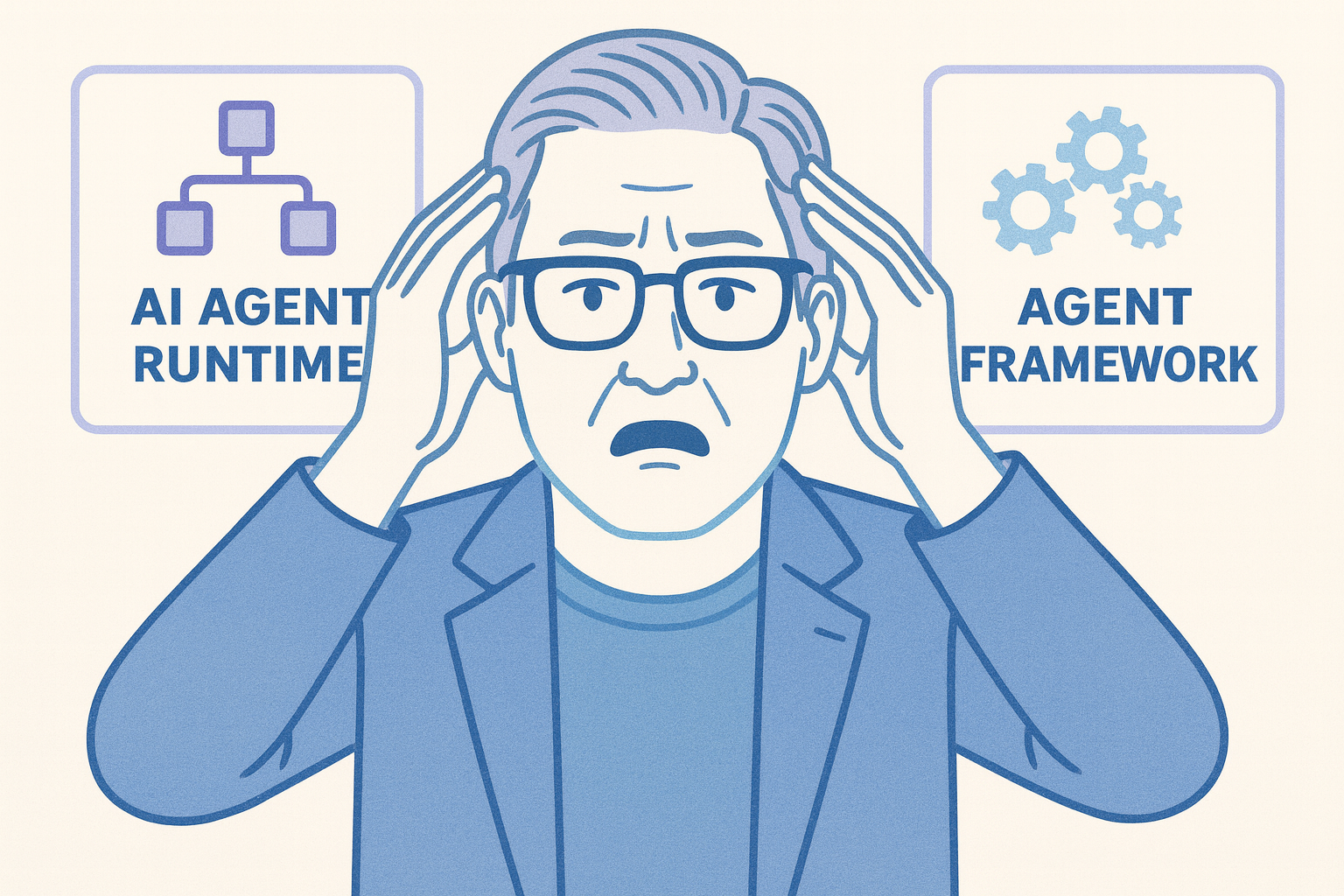
Combining LLM Platform Tooling with Workflow Automation Agents creates a more specific wedge than either trend alone.
Quick answer
LLM Platform Tooling × Workflow Automation Agents Opportunity Map is a product opportunity for developers and agencies: Map overlaps between LLM Platform Tooling and Workflow Automation Agents, then generate product, content, and service concepts from the shared evidence base.
Why now
LLM Platform Tooling: 16 linked evidence items, score 100. Workflow Automation Agents: 6 linked evidence items, score 99. The strongest current source trail includes 8 cited items across Hacker News, arXiv, Hugging Face Blog, AWS Machine Learning Blog.
Evidence trail
- [1] Seeing spatial IDE's (where terminals and files are displayed on a canvas instead of a regular dock like vscode) more often right now on HN and Reddit. This is a selection of the ones I've seen. https://github.com/voicetreelab/voicetree https://github.com/AgentOrchestrator/AgentBase https://github.com/0-AI-UG/cate did anyone else notice something like it or try them out?
- [2] Self-harm is a major public health concern, but current surveillance relying on hospital presentations is inadequate due to the low sensitivity of diagnostic codes. Emergency Department (ED) triage notes, recorded at the initial point of contact, provide a succinct summary of presentations and an opportunity to identify self-harm. We developed a three-stage approach, augmenting traditional machine learning with large language model-based screening and evidence extraction to detect self-harm in ED triage notes. We assessed model transferability across three Australian hospitals. Our approach showed AUPRCs of 0.887 +/- 0.016 and 0.884 +/- 0.012 during internal and external validation. Prospectively, it achieved AUPRC of 0.881 +/- 0.008 at the development site, and 0.879 +/- 0.012 and 0.816 +/- 0.015 at two external sites without site-specific retraining. A key advantage of the approach is that it enables identification of the primary self-harm method with an accuracy of 95%, supporting more granular surveillance beyond binary classification.
- [3] Recent advances in large language models and agentic AI systems have enabled significant progress in mathematical discovery, from solving competition problems to tackling research-level conjectures. However, open problems in computational mathematics have received comparatively less attention: research in this area often requires not only proofs but also numerical experimentation, adversarial constructions, and algorithm design. In this paper, we introduce an agentic research system, Iteris, designed for open problems in computational mathematics. We apply Iteris to two open problems from a recent Simons Workshop collection (arXiv:2602.05394). In these case studies, Iteris generated numerical evidence, constructions, and proof drafts that led, after expert review and correction, to verified results. The first result is a phase diagram for the asymptotic comparison between conjugate gradient and randomized coordinate descent on power-law spectra; the second is a counterexample showing that QR factorization with column pivoting can fail to select well-conditioned submatrices even under low coherence. These case studies suggest that agentic AI systems can participate meaningfully in research workflows for open problems in computational mathematics, while human validation remains essential.
- [4] Radical Moral Disagreements (RMDs) are highly polarising topics that are increasingly censored in everyday life, with growing evidence suggesting that this polarisation carries measurable costs to public mental health. To address these challenges, some researchers have proposed Large Language Models (LLMs) as a means to support more democratic deliberation and better moral reasoning. Yet existing tools are poorly calibrated to help people navigate RMDs, because of their intense and divisive characteristics. This paper introduces CONSIDER, a prototype for a one-to-one AI tool for RMD navigation. Drawing on Mill's account of the epistemic value of disagreement, CONSIDER aims at value clarification through structured disagreement with an opposing LLM-generated opinion. We describe CONSIDER's design logic and analyse potential risks posed by such tools to guide future development.
- [5] RSS item from Hugging Face Blog: Beyond LLMs: Why Scalable Enterprise AI Adoption Depends on Agent Logic
- [6] To my knowledge, this is the first formally verified implementation of an intersection algorithm for polygons. The experience of working with AI agents on this project changed a lot with recent model releases, as I describe in the readme. Opus 4.8 is able to provide algorithm implementation with formal proof in one shot, whereas previous models required me to provide proof strategies in multiple steps. Trust in the correctness comes entirely from the Lean checker and human review of a small specification, not from the LLM. Also check out the web demo built around the verified core linked in the readme. It supports multipolygons including holes, self intersections, and overlapping edges.
- [7] In this post, we walk through how to use Amazon Quick Research to integrate biomedical data sources for rare cancer research. The walkthrough uses pediatric sarcoma as the research domain and draws on publicly available datasets from PubMed and other open biomedical repositories. It covers the end-to-end workflow: defining a research objective, configuring data sources, reviewing the AI-generated research plan, running the investigation, and iterating on results using the revision and versioning system.
- [8] When you build agentic AI solutions, you face unique operational challenges. Agents make unpredictable decisions, costs spiral unexpectedly, and debugging non-deterministic failures seems impossible. Agentic AI applications don't just execute predetermined workflows. They reason, adapt, and make autonomous decisions, and DevOps practices need to be adapted. That's where AgentOps comes in, the operational discipline for deploying, managing, and continuously improving AI agents in production.
What to build or publish
- Target user: Builders, creators, and agencies looking for less-obvious AI niches with evidence behind them.
- Use case: Map overlaps between LLM Platform Tooling and Workflow Automation Agents, then generate product, content, and service concepts from the shared evidence base.
- Monetization angle: Paid idea reports, niche landing pages, lead magnets, or MVP validation packages.
- Distribution angle: Use the stronger trend as the traffic hook and the smaller trend as the novelty wedge.
SEO and content angle
LLM Platform Tooling plus Workflow Automation Agents: why the overlap matters and what to build.
Risks and validation
- Novelty: Combines LLM Platform Tooling + Workflow Automation Agents instead of treating each signal as a standalone feed item.
- Saturation risk: 0/100.
- Execution difficulty: 55/100.
- Evidence confidence: 95/100.
Recommended next step
Create a comparison/opportunity article and one prototype landing page.
Sources
[1] Hacker News, 2026-05-30: Spatial IDE's for agentic coding workflows [2] arXiv, 2026-06-01: Transferable Self-Harm Surveillance from Emergency Department Triage Notes Using an Evidence-Augmented Machine Learning Approach [3] arXiv, 2026-06-01: Iteris: Agentic Research Loops for Computational Mathematics [4] arXiv, 2026-05-29: Can Generative AI help people navigate Radical Moral Disagreements? The CONSIDER prototype [5] Hugging Face Blog, 2026-06-01: Beyond LLMs: Why Scalable Enterprise AI Adoption Depends on Agent Logic [6] Hacker News, 2026-05-30: Show HN: Formally verified polygon intersection – Opus 4.8 oneshots, prev failed [7] AWS Machine Learning Blog, 2026-06-01: Transforming rare cancer research with Amazon Quick: Integrating biomedical databases for breakthrough discoveries [8] AWS Machine Learning Blog, 2026-06-01: AgentOps: Operationalize agentic AI at scale with Amazon Bedrock AgentCore